Wednesday, December 1, 2010

be careful....

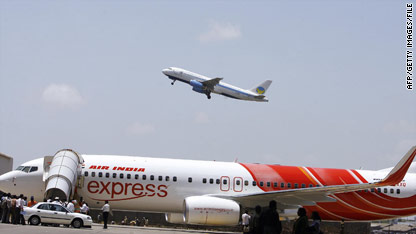
 this is a funny and tragedy news......    be careful man.....    no  mistake.....An Air India Express 737, similar to this one, was saved from crashing when co-pilot used emergency code to get back into the cockpit. An Air India Express 737, similar to this one, was saved from crashing when co-pilot used emergency code to get back into the cockpit.
The co-pilot of an Air India Express 737 sent the jetliner into a terrifying 7,000-foot plunge in May when he accidentally hit the control column while adjusting his seat, investigators report.
According to the report from India’s Directorate General of Civil Aviation, the co-pilot panicked and was unable to execute the proper procedures as the jetliner dropped from 37,000 feet at a 26-degree angle. The plane and its 113 passengers were saved when the pilot, who’d gone on a bathroom break, used an emergency code to get into the locked cockpit, jumped back into his seat and grabbed the controls to bring the plummeting plane out of its dive.
The aircraft would have broken apart if the descent had continued, the aviation agency report said. The aircraft was not damaged and no one was injured, the report said.
After the pilot, 39, regained control of the plane, he told passengers, who were in the middle of a meal when the jet plunged, that the plane had “went through an air pocket and that is why there was a rapid descent,” according to the report.
The aviation agency report concluded that the 25-year-old co-pilot had not been trained in the specific scenario the jet encountered and “probably had no clue to tackle this kind of emergency.”
Neither the pilot nor co-pilot were named in the report.
The Air India Express flight was en route from Dubai to Pune, India, on May 25 when the incident occurred.

Germany's immigration revolution

   Studies about immigration into Germany explain a lot of things about its impacts on German economy. However, there is an important point about immigration which is education  level of the immigrants. Numbers of the non native people can be a big causation to economy but ignorance in immigrants has more effect on economy then its numbers. Economy is an very important element of a country and there are a lot of influences on Economy. Immigration is a very important effect on German economy. For example, 3 million people immigrated in 40 years from Turkey to Germany and these people helped the Germany’s economic miracle but after 1990, immigrants started to became problem to Germans as indicated before in this article. Researchers talking about numbers of immigration and its influence on economy in Germany, but they are missing one important point; education level of people who are immigrants. Number of the immigrants may affect the economy but main affection caused by quality of the immigrants. Education level of the immigrants effect the economy.
  Main affection of the immigration on economy is education level of the people who immigrated to Germany. Turkish immigrants were the big portion of the immigrants and their education level help to understand main effect of the economy in positive way and negative way.  People who are educated usually look for office jobs and leadership positions. If a person doesn’t have a college education, companies can use that person in every difficult works and pay cheaper labor wages because that person doesn’t have a lot of option in work places. Labor force which came into Germany in 1950s and 1960s hadn’t good education level and it was easy to use them where ever the Germans want in cheaper wages.  If a person working too much with less money, economic miracle occurs in every country like in Germany.  For example; Turkish immigrants who came into Germany in 1950s and 1960s were uneducated people. According to statistics Turkish proportion of the literacy was quarter of the population in 1950s.
This result only for people who can write and read, and the people who had their college education was less than people who can write and read.  On the other hand, German signed agreements with countries which are Greece, Turkey, Portugal, and Yugoslavia. Why Germany didn’t go Britain or America to sign immigration agreements? They went only poor countries and they found people who had uneducated people and used in their work places. This is very obvious that low education level of the immigrants causes economic boom in Germany.
 
 
===================================================================
=====================================================================
===================================================================
Germany's immigration revolution
Indian IT experts
Germany will rely on foreigners to fill skills shortages
By Rob Broomby in Berlin At the moment, Infopark - a youthful German internet firm employing 130 people - is turning away highly qualified job applicants. But that could soon change.
In a decade or so Germany will start to experience severe skilled labour shortages.


"It's a good idea to bring special people to us and highly qualified people. I think we will need this. Already at the moment we have here some people which are not originally from Germany - 10% or so - this percentage will become higher," says Bjorn Kunze, the firm's human resources manager. With a declining birth rate and an ageing population Germany has been forced into a radical re-think.
Recommendations
A nation which has never seen itself as an immigration country has been forced to admit that immigration may not only be good for the nation, it may even be necessary.
"An ageing and shrinking population needs goods and services and somebody has to produce the goods and has to provide the services," says Professor Rainer Muenz of the Immigration Commission, who published a recommendations on the future of immigration in Germany.

Rita Suessmuth presents the report to Interior Minister Otto Schilly
"We need immigrants, and not only as an exceptional deviation from normality but as the new normality." "This means Germany should come to terms with its demographic future and this would be to recruit attractive immigrants for permanent settlement," he says.
The commission's report recommends targeted economic migration. Would-be settlers would qualify using a points system with bonuses for their skills qualifications and their language ability.
But numbers will be modest to start with - just 40,000 to 50,000 people per year.
The chair of the commission, Professor Rita Suessmuth, says she wants a flexible system.
"Every year we are looking (at) how many have come and which are the needs. What we know already, starting with the year 2010 we need much more and when I said we recommend 50,000 we didn't count the family. Usually we count at least three persons per average," she says.
Pros and cons
The demographic time-bomb means Germany's lavish welfare state and high pensions could soon be unsustainable.


For the first time since 40 years migration is being discussed in a positive manner
Safter Cinar
It is surprising nonetheless that no one is suggesting cutting back social protection. Instead immigration is now seen as the answer.
But for Dr Achim Dercks of the association of German Chambers of Commerce, immigration has to be carefully targeted.
"If there is a problem with the labour market that we cannot find people that the companies need then that is a negative fact on the gross national product," he says.
A new wave of immigration could also change things for Germany's large Turkish community.


The unions and the entrepreneurs, they all claim that we need immigration so I think the Christian Democratic Party has to be careful that they don't isolate themselves
Marie-Louise Beck
Government Commissioner for Minority Rights
Forty years since the first guest workers arrived and many of the country's Turks still endure second class status. "For the first time since 40 years migration is being discussed in a positive manner. This will help also the people who are now living here because I think they will have some measures who will help to integrate the people to give them maybe a more equal rights," says Safter Cinar, vice-president of Germany's Turkish community.
Changing Germans
The government will publish its own proposals in September and legislation will follow soon after.
The German Government's main objective has been to keep immigration out of the next election.

Angela Merkel
Angela Merkel's Christian Democrats have yet to support the proposals
Marie-Louise Beck, the government's Commissioner for Minority Rights, says the opposition, right-wing Christian Democrats (CDU) will have to tread a careful line. "The situation really has changed. The unions and the entrepreneurs, they all claim that we need immigration so I think the Christian Democratic Party has to be careful that they don't isolate themselves."
Germany has never seen itself as a multi-cultural society and talk of integration has at times taken on an intolerant tone.
Then the message was that foreigners had to behave like Germans. But Germans themselves are now embarking on a journey which could change their society forever.


Terror Arrests in Spain and Thailand


Terrorism is a tactic. You have to show willingness to use arms to try and defeat them while showing those who are thinking of using terrorism that were not that bad and we want to help them. I personally believe it is beter to go and fight the problem sooner, rather then later (I.E: Look what hitler did, in 1933,34,35,36 and even up to 38 [a year before WWII started] France could of easily defeated Germany by itself.) There were many terrorist attacks before 9/11 (First WTC attack, Embassy bombings, the Cole bombings) were al-qaeda wasn't as mainstream as it is now and could be beaten more easily. Now they (and splinter cells) are everywhere and will be harder to beat. IMO, we should take out the Iranian leaders somehow or get them to stop supplying al-Qaeda some how. During the british hostage negotiations, i was thinking we should of just taken Ahmajid and the Ayatollah and trade them for the hostages. In the words of Roossevelt, we should speak softly and carry a big stick.

How about quran??  What this holy book says about the terrosrism. 
Most Islamic fundamentalists see west culture as a threat to the Muslim
culture. TV, the internet, movies, McDonalds, and games carry
western culture to the Islamic world ). Islamic fundamentalist called people to fight against this cultural invasion
and scared people if they follow western culture, they will lose their
religion. This fight called jihad against the west by terrorists. Jihad
became an international problem to solve because this idea influenced
most Muslims. Jihad became a common word to state terrorist violence against
civilians. Unfortunately, the real meaning of the jihad is confused
today. If a Muslim calls, he is a great supporter of the jihad; people will
assume he is a terrorist. Confused meaning of jihad became a international
icon of Muslims all around the world. If someone is looking for real solution
to the Islamic terrorism, teaching of real understanding of jihad is very
important. There are two kinds of jihad. First is called a Greater
Jihah which encourages people to fight wrong convictions, carnal desires, and
evil inclination. The other jihad is Lesser Jihad which brings others
to path of Islam. The second type of jihad is misinterpreted as using
weapons to non Muslims to convert them . Prophet Muhammad was
praying all nights, fasting mostly and helping the poor people. This was his
Greater Jihad which was educating his soul. His second Lesser Jihad was
teaching people Islam. He never used force to convert people into
Islam.
The Prophet Muhammad had wars, but these were for self defense because
nonbelievers attacked Muslim cities to kill Mohammed. He fought against
enemies but he had to follow Islamic war rules. The Koran says that a
Muslim cannot kill women, children, or elderly, destruct land and corps
in
a war . If the real meaning of the jihad is examined
correctly, it is easy to spread real the idea of the jihad. After
Muslims all around the world learn real meaning of the jihad, it will be easy
tofinish international terrorism. 
 
===============================================================
========================================================
======================================================= 

MADRID — The police in Spain and Thailand arrested 10 people suspected of operating a counterfeiting network that provided fake European passports to Qaeda-linked terrorist groups in order to smooth their entry into Western countries, the Spanish Interior Ministry said Wednesday.
Seven people — six Pakistanis and one Nigerian — were arrested in Barcelona in raids late Tuesday and early Wednesday, and three more — two Pakistanis and one Thai — were arrested in Bangkok in the same period, the ministry said in a statement.
One of the Pakistanis arrested in Bangkok, a 42-year-old named Muhammad Athar Butt, known as Tony, directed the forging operation from Thailand, according to a Spanish security official. Mr. Butt was also in charge of cells in Brussels and London, the security official said, speaking on condition of anonymity about a current investigation.
The arrests struck at “an important passport operation for Al Qaeda, weakening its international counterfeiting apparatus, and therefore, its capacity to operate,” the ministry statement said, adding that the raids came after a year-and-a-half-long international investigation, which is continuing.
The police said the network was linked to Lashkar-e-Taiba, the Pakistan-based terror group behind attacks in Mumbai, India, in November 2008 that killed at least 163 people. The network also provided counterfeit passports and other documents to the Tamil Tigers, the Sri Lankan separatist group defeated last year by the government after decades of war, the police said.
The terror organizations would request forged passports from the network according to nationality and age, the authorities said. Members of the network would then steal passports from tourists, mainly in Barcelona, and send them to Thailand where they were forwarded to the terror groups, they said.
The ministry statement hinted at how the plot was discovered, saying that officials had “detected the transport to Thailand of numerous passports stolen from Spain.”
The raids come at a time of heightened concern among American and European officials over a possible terrorist strike in Europe. In October, the State Department in Washington issued an alert for American travelers to Europe to be vigilant about possible attacks.
In uncovering a suspected document forging ring, the arrests in Spain and Thailand offer a window into the shadowy nexus between terrorist organizations and loose criminal networks in Europe and Asia that facilitate terrorist activities by helping provide militants with transportation, weapons or logistical support. Some terrorist groups use in-house facilitators — to raise money, for instance — while they outsource other needs for their illicit operations.
Counterterrorism specialists say that disrupting facilitators who provide militants valuable services can sharply disrupt terrorist groups, at least until they find replacements.
The police seized nine passports awaiting shipment to Thailand and another that had already been forged, along with a computer and 50 cellphones in raids on the suspects’ homes in Raval, a downtown neighborhood that is home to a large immigrant community. Spanish television showed footage of one of the arrests, with a man taken away in handcuffs at dawn by police. The man was heard repeatedly saying, “I’m not a terrorist, that is a lie.” An interior ministry official familiar with the case said further arrests could not be ruled out.
In January 2008, Spain’s military police arrested 14 men in the Raval neighborhood, part of a vast, coordinated suicide plot that officials said demonstrated the growing threat of terrorist activities migrating from Pakistan to Continental Europe.

Friday, November 26, 2010

KOREA -USA -CHINA >>>>> PEACE- WAR -HELL -HEAVEN NOOOO!!!! WORLD WAR 3

Some people argue about the USA involvement to every part of the world.  Their point is that USA domestic issues are more important than other problems in other parts of the world. First of all,  It is highly developed country and it requires lot of energy to keep the same status. US cannot afford a condition in which various countries deal with her with their conditions. So, these nations should be on gunpoint of US wants keep it developed. the second most important reason is that that is so called super power and it cannot afford to loose this position.

How about now????   What is going on in Korea now? What will happen tommorrow? WW1 started after the asssination of one preson and millions died? What if a psycho drops a nuclear bomb? Who knows?
Logistically, the North Koreans can't push very far, so if they can be held to the upper peninsula, they can be punished pretty brutally from the air. But I don't think there's any way in hell we can kick them out of territory they occupy.  North Korea can barely feed its people, how could it provide the logistics to invade anywhere. North Koreans are using quite old technology, While Americans supply South Korea with modern technology. The only reason North Korea is still here today is 500,000 chinese died on North Korean soil
 another point is:::::

China will take out Kim Jong Ill before it goes to war and put in a new puppet that is stable. China is not at all happy with Kim Jong Ill becaue too many North Korean refugees are fleeing to China as it is and China does not like the mess and issues that Kim is bringing to their door step.
At the same time, China does not want a war against the UN again because their economy depends on trade and their currency is artificially stabilized. A war destroys that. If China's economy goes, so does the USAs.
Also, South Korea probably doesn't want to unify with North Korea because it would be like West and East Germany but about 10 times more expensive. For example there is only paved road outside a city in North Korea, and that goes to their little sliver of boundry with Russia. South Korea would have to suck up a bulk of those modernization costs.

--------------------------------------------------------------------------------------------------------
--------------------------------------------------------------------------------------------------------
-------------------------------------------------------------------------------------------------------
-------------------------------------------------------------------------------------------------------

Seoul, South Korea (CNN) -- South Korea named a new defense minister Friday to replace the official who resigned Thursday amid heavy criticism due to North Korea's sinking of a warship in March and Tuesday's deadly shelling of an inhabited island.
South Korea's government nominated Kim Kwan Jin as defense minister, a Blue House media official told CNN.
The National Assembly will hold a confirmation hearing before Kim formally takes office.
Former Defense Minister Kim Tae-young, a former general, resigned after coming under heavy criticism for the sinking of the South Korean war ship Cheonan and again after North Korea struck Yeonpyeong Island on Tuesday.
The appointment comes amid continued war rhetoric from North Korea, which said Friday that South Korea and the United States are recklessly pushing the Korean peninsula toward war by scheduling a joint military drill for this weekend.
"The situation on the Korean peninsula is inching closer to the brink of war due to the reckless plan of those trigger-happy elements to stage again the war exercises targeted against [North Korea] in wake of the grave military provocation they perpetrated against the territorial waters of [the North Korean] side in the West Sea," said the North's official KCNA news agency.
The West Sea is the part of the Yellow Sea that's closest to the Koreas, and it was the scene of Tuesday's shelling of a South Korean island by North Korea. The attack on Yeonpyeong Island killed four South Koreans and injured 15 others.
North Korea said the South provoked the attack because shells from a South Korean military drill landed in the North's waters. South Korea was holding its annual Hoguk military drill when the North started its shelling.
"The army and people of [North Korea] are now greatly enraged at the provocation of the puppet group, while getting fully ready to give a shower of dreadful fire and blow up the bulwark of the enemies if they dare to encroach again upon [North Korea's] dignity and sovereignty even in the least," KCNA said Friday.
Scene of the Korean attack
The Koreas clash
Rudd: China must 'step up to the plate'
Explainer: All eyes on North Korea
RELATED TOPICS
"The group should not run amuck, clearly understanding the will and mettle of the highly alerted army and people of [North Korea] to wipe out the enemies."
The United States has condemned the attack on Yeonpyeong Island and affirmed its military commitments to South Korea.
South Korean and U.S. forces plan to drill in the Yellow Sea from Sunday until Wednesday. The U.S. is sending the aircraft carrier USS George Washington to the drill, which is being billed as defensive in nature. The exercises were planned months ago, but are meant to underscore strong ties between South Korea and the United States, defense officials from both countries have said.
On Friday, the sound of gunfire from suspected military exercises could be heard coming from North Korea, South Korean defense officials said. The gunfire did not appear to be aimed at Yeonpyeong Island, which is just off the coast of North Korea, though South Koreans on the island heard approximately 20 shots.
The island has been almost entirely evacuated of its population of about 1,300. About 30 residents were left, South Korea's Yonhap news agency said. Most residents had fled to the South Korean mainland. About 100 soldiers and workers also were on the island, doing cleanup and repairs.
The North appeared to have carefully targeted Tuesday's attack, a key South Korean lawmaker said Friday after a visit to Yeonpyeong Island.
"My hunch is that North Korea was picking and choosing its aiming point. They are very focused. They attacked gas station, helicopter pad and command and control sites and water tanks. Everything that is directly related to military operations, they have completely smashed," said South Korean Congresswoman Song Young-sun, an influential member of the National Assembly's Defense Committee.
Asked why North Korea might have attacked, she said: "I think they are doing this training for dual purposes. One is for South Korea: They are arbitrarily suggesting the different maritime border line from our Northern Limit Line. They are trying to verify what they demand, so they are doing exercises and training."
The expected forthcoming succession of North Korean leader Kim Jong-Il by his youngest son, Kim Jong Un, also plays into it, Song said.
"What Kim Jong Un wants to demonstrate is his influence and his exertion of power, because he needs in a very speedy time to prove within the next couple of years that he is strong and qualified to succeed," she said.
The South has scrambled as a result of Tuesday's shelling.
Kim Tae-young had submitted his resignation May 1, after the Cheonan sinking, but it was not accepted until Thursday because of the Cheonan aftermath and other military-related issues, the administration of President Lee Myung-bak said.
The Cheonan sinking sparked a public uproar, with many saying that it should not have been possible for North Korea to have damaged South Korea's military, which is much more high-tech.
Lee also drew criticism for his first statements after the Yeonpyeong bombardment, in which he asked for a stern response but added that de-escalatory measures also had to be taken. Later that same day, Lee spoke to the military and urged heavy retaliation.
On Friday, South Korea's Yonhap news service said that the country was expected to increase defense spending. Citing government officials, Yonhap said approximately 1.4 trillion won ($1.23 billion) has already been earmarked to buy weapons such as K-9 self-propelled howitzers and F-15K fighter jets next year.
South Korea used K-9 howitzers in response to North Korea's shelling and has deployed F-15Ks to Yeonpyeong Island. Some of the howitzers were damaged in the attack.
South Korea said Thursday it will strengthen and supplement its rules of engagement in the Yellow Sea. South Korean marine forces based in five islands near North Korea and the disputed Northern Limit Line also will be reinforced, a government spokesman said.
The tense maritime border between the two Koreas has become the major military flash point on the Korean peninsula in recent years.
The Yeonpyeong attack was the first direct artillery assault on South Korea since the Korean War ended in 1953.

Thursday, November 25, 2010

permanent war!!!!!!!!!!!!!!!!!!!!!!!!!!!!!!!!!!!!!!!!!!!!!!!!!!!!!!!!!!!!!!!!!!!!!!


Europeans continiously cut their defence spending and increase their social spending, the US is doing the reverse.  Pretty good deal for Europeans ! I guess congress should cut social security, medicare
and unemployment benefits so America can spend the money on defending South Korea - or does anyone think South Koreans have the money to defend themselves ?
Scary, the dumbing down of America continous unabated. Conventional war is not the right tool for fighting terrorism. Terrorism can be fought with security, police work, espionage, spy craft, targeted killing, diplomacy and special operations. But a full-scale war only wastes money and creates more of the poverty, destitution, chaos and resentment that fuel terrorism. This is a theory only. There can be a lot of argument on.
 Ok  terrorism is a major global problem. How about solutions?
Terrorism has been around since the begining of time, I mean it is just a fact of life, people have diffrent ways of expressing themselves, as wrong as it is terrorists express their feelings through comitting acts of terror. It will always be here and no-one will ever be able to stop all of them.  Or can we?

---------------------------------------------------------------------------------------------------------------
-=========================================================================
----------------------------------------------------------------------------------------------------------------
xxxxxxxxxxxxxxxxxxxxxxxxxxxxxxxxxxxxxxxxxxxxxxxxxxxxxxxxxxxxxxxxxxxxxxxxxxxxxxxxxxxxxxxxxxxxxxxxx
CNN -- When the president decided to send more troops to a distant country during an unpopular war, one powerful senator had enough.
He warned that the U.S. military could not create stability in a country "where there is chaos ... democracy where there is no tradition of it, and honest government where corruption is almost a way of life."
"It's unnatural and unhealthy for a nation to be engaged in global crusades for some principle or idea while neglecting the needs of its own people," said Sen. J. William Fulbright, then chairman of the Senate Foreign Relations Committee, in 1966 as the Vietnam War escalated.
Fulbright's warning is being applied by some to Afghanistan today. The U.S. is still fighting dubious wars abroad while ignoring needs at home, says Andrew J. Bacevich, who tells Fulbright's story in his new book, "Washington Rules: America's Path To Permanent War."
As the Afghanistan war enters its ninth year, Bacevich and other commentators are asking: When does it end? They say the nation's national security leaders have put the U.S. on an unsustainable path to perpetual war and that President Obama is doing little to stop them.
No one wants a permanent war ... but the people we're fighting against have already declared permanent war against us.
--Thomas Cushman, scholar and author
Bacevich has become a leading voice among anti-war critics. He is a retired colonel in the U.S. Army, a former West Point instructor and a member of the Council on Foreign Relations.
He's also a Boston University international relations professor who offers a historical perspective with his criticism. He says Obama has been ensnared by the "Washington Rules," a set of assumptions that have guided presidents since Harry Truman.
The rules say that the U.S. should act as a global policeman. "Fixing Iraq or Afghanistan ends up taking precedence over fixing Cleveland or Detroit," Bacevich writes.
His solution: The U.S. should stop deploying a "global occupation force" and focus on nation-building at home.
"The job is too big," he says of the U.S. global military presence. "We don't have enough money. We don't have enough troops. There's a growing recognition that the amount of red ink we're spilling is unsustainable."
Thomas Cushman, author of "A Matter of Principle: Humanitarian Argument for War in Iraq," says Bacevich is mimicking isolationists who argued before World War II that the U.S. couldn't afford to get involved in other country's affairs.
"No one wants a permanent war, and nobody would argue that our resources could be better spent at home," Cushman says. "But the people we're fighting against have already declared permanent war against us."
Does Obama buy into the "Washington Rules"?
The questions about the Afghanistan War come at a pivotal moment. The Obama administration plans to review its Afghanistan strategy next month.
The president had pledged to start withdrawing some U.S. troops next July. Obama and NATO allies in Afghanistan recently announced that combat operations will now last until 2014.
Those dates matter little to Bacevich.
"Obama will not make a dent in the American penchant for permanent war," he says. "After he made the 2009 decision to escalate and prolong the war, it indicated quite clearly that he was either unwilling or unable to attempt a large-scale change."
Bacevich says the notion that the U.S. military has to stay in Afghanistan to deny al Qaeda a sanctuary doesn't "pass the laugh test."
"If you could assure me that staying in Afghanistan as long as it takes will deny al Qaeda a sanctuary anywhere in the world, then it might be worth our interests," he says. "Pakistan can provide a sanctuary. Yemen can provide a sanctuary. Hamburg [Germany] can provide a sanctuary. ''
John Cioffi, a political science professor at University of California, Riverside, says the nation's "increasingly unhinged ideological politics" makes it difficult for the country to extract itself from battles in Afghanistan, Iraq and Central Asia.
"The U.S. is not on the path to permanent war; it is in the midst of a permanent war," Cioffi says.
Permanent war is made possible by massive defense spending that has been viewed as untouchable. But that may change with the recent financial crisis and the decline of the nation's industry, Cioffi says.
More ordinary Americans might conclude that they can't have a vibrant domestic economy and unquestioned military spending, Cioffi says.
"All this points to a time in the future when the government will no longer have the resources or popular support to maintain what amounts to an imperial military presence around the world," he says.
Yet leaders in the nation's largest political parties may still ignore popular will, says Michael Boyle, a political science professor at La Salle University in Pennsylvania.
"While the public tends to be much more concerned with domestic issues, both the Democratic and Republican foreign policy establishments tend to be more internationalist and outward-looking," Boyle says. "This makes them far more willing to conclude that nation-building missions in Afghanistan are essential to national security."
Birth of the 'Washington Rules'
The debate over permanent war may sound academic, but it's also personal for Bacevich.
Fixing Iraq or Afghanistan ends up taking precedence over fixing Cleveland and Detroit.
--Andrew J. Bacevich, author and historian
RELATED TOPICS
His son, a U.S. Army officer, was killed in Iraq, a war he opposes. And Bacevich has written several other books on the limits of American military power, including "The Limits of Power: The End of American Exceptionalism."
Bacevich says the Washington Rules emerged when America was exceptional -- right after World War II when a newly empowered U.S. deployed a global military presence to contain communism and spread democracy.
Communism's threat has disappeared, but U.S. leaders continue to identify existential threats to justify the nation's global military empire, Bacevich says.
The cost of that military empire is immense: The U.S. now spends $700 billion annually on its military, as much money as the defense budgets of rest of the world combined, he says.
Bacevich says the Founding Fathers would be aghast. They thought that "self-mastery should take precedence over mastering others."
"It's not that the Founding Fathers were isolationists or oblivious to the world beyond our shores," Bacevich says. "Their reading of history led them to believe that empire was incompatible with republican forms of government and a large standing army posed a threat to liberty."
What Bacevich's critics say
William C. Martel, author of "Victory in War," says the U.S. didn't build a global military presence after World War II out of hubris but because of necessity. Much of the world had been destroyed in 1945.
"We had no option but to be engaged as a global leader," he says. "If we did not stand up to totalitarianism, the world would have been a much worse place."
Martel, an associate professor of international security studies at The Fletcher School at Tufts University in Massachusetts, says the U.S. must have a global military presence to confront radical groups that seek weapons of mass destruction.
The U.S. military may fight in Afghanistan "for years." But it's also been in Germany and Japan for decades, Martel says.
"We have a $14 trillion a year economy," Martel says. "We're spending roughly 4 percent of our GDP on defense. That's historically where we've been for decades. I don't see that as unaffordable."
Permanent war can, perversely, boost the nation's economy, says Jerald Podair, a history professor at Lawrence University in Wisconsin.
After World War II, most observers predicted a return to the Depression, Podair says. But Cold War military spending drove the nation's economy to its longest period of sustained economic expansion in history.
Transferring military money to domestic needs will not stimulate the American economy the same way war spending will, Podair says.
"It is sad to say that 'war is the health of the state,' but during the last 70 years, that has generally proved to be true," Podair says. "Unfortunately, the United States may have to 'fight' its way out of recession, just as it did during World War II and the Cold War."
Obama, though, might fight his way to a presidential defeat in the 2012 election if he doesn't find a way to pull the U.S. off the path to permanent war, Bacevich says.
If Obama is still waging war in Afghanistan in 2012, he'll be in trouble, he says.
"That's going to pose difficulty for him in running for re-election because many of the people who voted for him in 2008 did so because they were convinced that he was going to bring about change in Washington," Bacevich says. "But the perpetuation of war wouldn't amount to change."


As you see, I cannot answer the question. But USA has to think about the domestic condition. Is the USA economy increase after 9/11 or not? what will happen after 10 years? Terrosirm is the problem that solution is harder that solution of cancer!!!!!
Thursday, November 11, 2010

USA-CHINA-INDIA and ECONOMY


Most likely China at this rate. China has the infrastructure, and large labour force (unskilled, but well catered 
 for) to attract foreign investors worldwide. They have the capacity to mass produce necessary goods to serve the world market, and benefit from economies of scale. By attracting more FDI, more advanced and efficient technology and capital will be brought into the country. India has a highly educated population, however those resources are scarce since the gap between rich and poor is wide and there's more impoverished people than there are of educated elite. The infrastructure also needs some fine-tuning. I think it will be some time before India can catch up with China at this rate. the problem for both countries is that the economy depended to foreign companies. When the middle class grows in these two countries, salaries will go up. If it happens, economic crisis is great risk for these two countries.
There will be more superpowers in the future and world will be multipolar world.  China, USA India, EU, Russia, Mexico, Korea, japan etc.. Economy experts predict that china overtakes USA economy by 2031 and India will take in 2050. But it will take longer till the standard of living in china and India reach the high American one. 
 -----------------------------------------------------------------------------------------------------------
-----------------------------------------------------------------------------------------------------------
---------------------------------------------------------------------------------------------------------
HERE IS THE LINK FOR LAST NEWS ABOUT THE ECONOMY OF THE CHINA, INDIA AND USA :   http://money.cnn.com/2010/11/10/news/economy/emerging_markets/index.htm?cnn=yes&hpt=C1
NEW YORK (CNNMoney.com) -- Changes in the global pecking order are coming.
As western nations face stunted economic growth and years of painful budget-slashing ahead, developing nations like China, Brazil, India and Russia are slowly moving up on the world stage.
The United States is struggling to hit 2.7% growth for the year, while emerging economies, which also include smaller countries mostly in Asia and Latin America, are collectively on track for 7.1% growth for the year.
On a trip to Asia this week, President Obama reaffirmed India's increasing importance as a global trading partner, signing $10 billion in contracts for U.S. exports. And when world leaders meet in South Korea for the G-20 summit this week, Europe will give up a few IMF seats to emerging nations to reflect their expanding global influence.
China has already surpassed Japan to become the world's second largest economy, and could overtake the United States for the no. 1 position in 10 to 15 years. If that happens, it will mark the first change in the leadership position, since the U.S. overtook Great Britain in 1894.
So where did these countries get it right while western superpowers got it so wrong?
How they got here
Unlike the U.S. and Europe, banks and governments in emerging countries didn't take on much risk leading up to the recession, and had a huge savings stash.

This was a lesson they had learned after getting socked by financial crises in the 1990s, said Garry Evans, global equity strategist for HSBC, based in Hong Kong. By the time the recession hit in 2007, many of the emerging countries were well-positioned to withstand another shock.
For example, after a massive financial meltdown in 1997, Asian countries were bailed out by the IMF. As a condition, they were forced to adopt strict regulations. To avoid similar medicine in the future, those countries buckled down, Evans said.
"It's a bit like if you bully a kid at school, the kid is going to learn martial arts and keep a stock of knives hidden in the closet so he can come out fighting the next time," Evans said. "There's a bit of that mentality in Asia."
After decades of hyperinflation and a currency crisis in the late 1990s, Brazil, too, had implemented conservative monetary and fiscal policies that shielded it from the worst of the recent financial crisis.
So while U.S. banks lost billions as their investments in mortgages and complex securities went belly-up, banks in developing nations were sitting on a comfortable cushion of cash and more conservative investments.
Growing too fast?
While it might sound like a win for the global economy, rapid growth in emerging markets is not without risks.
For example, export-dependent nations like China are running huge trade surpluses at the expense of trading partners like the U.S., igniting tensions around the world and sparking fears of global trade wars.
And growing too fast can pose other dangers too. For example, China's overheating real estate market is a looming danger, as breakneck growth -- on track for 10.5% in 2010 -- has pushed property prices sky high. A bursting real estate bubble in China could bring on another economic meltdown that could spread to the rest of the world.
Chak Wong, a finance professor at Chinese University of Hong Kong, likens the hurdling Chinese economy to the movie "Speed," the 1994 thriller where a bus is detonated to explode if it slows below 50 miles per hour.
"China more or less is like that ... they would like to stop it, but it's really difficult to stop it without causing major damage," Wong said. "The really difficult part is how to engineer a soft landing."
Kicking the 'third world' stigma
Even if China does become the world's largest economy, its population is roughly 4.5 times bigger than that of the U.S., making it difficult for China to catch up to the American standard of living, said Jay Bryson, global economist with Wells Fargo.
"It's only a matter of time before they catch us. Sooner or later India will probably catch us as well," Bryson said. "But, when that day comes, they will still be very, very dirt poor economies. The average Chinese citizen will be 25% as well-off as the average American citizen."
Still, many say the U.S. should not fear emerging markets, led by China, taking on a larger leadership role in the world. In some respects it may just be a "return to normal," said Piero Ghezzi, managing director and head of emerging markets research at Barclay's Capital.
"Historians like to point out the fact that the past few hundred years may have been more of an exception than the rule," Ghezzi said. Until the 19th Century, China had the world's largest economy. "For most of world history, China and India had a huge percentage of the world economy." To top of page

Monday, November 8, 2010

Yemeni al Qaeda Claims Package Bomb Attempts.....

What the average reader and citizen of a Western civil society does not understand about "package boms" is that they are actually more effective if they DO NOT EXPLODE. IF someone paliing to ship a bomb and it is flying thru Europe. If they can do it, they could explode them in the airplanes.
The pictures of smiling police agents with now harmless explosive devices they have "intercepted" make the best propaganda for terrorists. What they wish for even more than just as killing people is recognition as effective, known terror organizations.
These people are not in business to die. They are trying to attract recruits and, most important, MONEY from impressed and fearful Arabs who can be convinced(just like American Jews by Israel), that giving money to Jihadists is enough to aid the "cause" and the "retaking of Jerusalem",(for Jews: the rebuilding of the Temple in Jerusalem was once the rallying cry).
An unexploded bomb flying all the way to Europe is a better money raiser for the terrorists and for the national police agencies, who see every potential explosion as an additional 100 agents on the payroll for the next few centuries then any number of mysteriously crashing planes.
 On the other hand it is very hard to prevent terrorist attacks on lanes because an airplane which is in anther country alwyas under the risk of placing bombs. we can put machines to check passengers, but there is nothing to do of someone turn them off in right time....
 =============================================================================
==========================================================================
==========================================================================
The Yemen-based arm of the al Qaeda terrorist network claimed responsibility Friday for last week's plot to send explosive devices on cargo planes bound for the United States.
Al Qaeda in the Arabian Peninsula, which had been suspected in the plot, posted its claim on various radical Islamist websites, saying, "We will continue to strike blows against American interests and the interest of America's allies."
The statement also claimed the group is responsible for the crash of a UPS cargo plane in Dubai, United Arab Emirates, on September 3.

Investigators said earlier this month they had failed to turn up any evidence that terrorism was involved in that crash, which killed the two pilots aboard, according to a U.S. government official.
About 45 minutes after UPS Flight 6 departed Dubai International Airport for Cologne, Germany, the crew declared an emergency due to smoke in the cockpit. They asked to return to Dubai, but shortly before the plane could get to the airport it crashed.
Officials in the United Arab Emirates have said -- and a U.S. official confirmed -- that the plane's cockpit voice recorder has been examined and nothing on it indicates an explosion. Explosions have distinctive sound signatures, and that would have been recorded on the device, the official said.
The UAE said it has "eliminated the possibility of an onboard explosion, following a detailed onsite investigation of the wreckage."
A U.S. counterterrorism official said Friday that while "there are very strong indications that AQAP was responsible for plotting last week's disrupted cargo plane plot ... we can't confirm at this point their claims about the early September incident."
White House counterterrorism chief John Brennan said Sunday that the United States is "looking very carefully" at the September crash to see if it could be related to the recent terror threat involving cargo aircraft.
The latest threat was revealed October 29 when authorities in the United Arab Emirates and Britain found two explosives-laden packages sent from Yemen that were addressed to synagogues in Chicago, Illinois.
The statement by al Qaeda in the Arabian Peninsula said that since Western media did not link the September UPS plane crash to the group, "we decided not to announce it so we could carry on a similar operation."
"We did that this time using two devices, one of which was sent via the American UPS company and the other via the American FedEx company," the statement said.

http://articles.cnn.com/2010-11-05/world/yemen.security.concern_1_aqap-plane-crash-al-qaeda?_s=PM:WORLD